
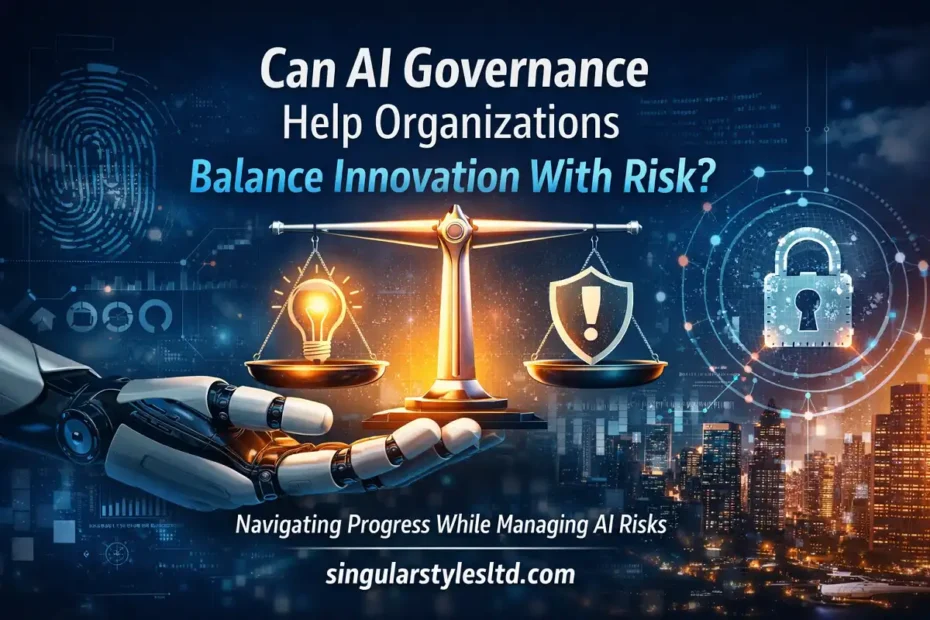
AI is moving fast. It helps teams work smarter, launch products quicker, and discover new ideas every day. But with all this speed comes real risk. What if an AI tool makes a wrong decision? What if customer data is not handled properly? Many organizations want to innovate, but they also want to stay safe, ethical, and trusted. That’s where an AI Management Framework comes in. It gives clear rules, checks, and responsibility around how AI is built and used. In this blog, we explore how AI Risk Management can help businesses grow with confidence while keeping risks under control.
Understanding AI Governance and Its Business Impact
When we talk about AI Governance, we’re describing the policies, workflows, and standards that guide how your organization builds, deploys, and oversees AI systems. For a deeper breakdown of core concepts and terminology, resources like Credo AI’s AI Governance glossary provide helpful clarity around evolving governance practices.
What AI Governance Actually Covers
When you implement AI Risk Governance properly, you’re tackling multiple oversight dimensions at once. Who gets to make the call on AI decisions? What’s the review process look like?
How do you determine whether a specific AI project moves forward or gets paused for deeper evaluation? These frameworks touch everything from data integrity and model testing to privacy protocols and fairness audits.
Picture it as your roadmap that keeps AI projects synchronized with company principles and legal obligations. When governance clicks, your technical teams operate with crystal-clear expectations. Compliance officers can actually verify what’s happening. Executives sleep better knowing innovation won’t blindside them with liabilities.
How Regulations Are Shaping AI Adoption
The regulatory environment? It’s shifting under your feet constantly. Right now, according to the Organization for Economic Co-operation and Development (OECD), over 1,000 AI regulations and initiatives are being debated across 69 countries. This global jigsaw puzzle of emerging rules means one thing: you can’t afford to sit on the sidelines waiting for final legislation before building governance practices.
Approaches vary wildly by region: some governments favor prescriptive rules, others lean on principles, but accountability is the common denominator. Organizations that build governance structures now position themselves to adapt smoothly when new regulations drop, rather than scrambling in reactive panic mode.
With governance fundamentals clear, here’s what you really need to know: Which specific elements determine whether you’ll successfully innovate while keeping risks under control?
Key Factors in Balancing Innovation and Risk in Organizations
Successfully balancing innovation and risk means understanding where opportunities and dangers collide throughout your AI journey. Your specific challenges will vary based on industry, organizational maturity, and how much risk you’re willing to stomach, but certain patterns show up everywhere.
Mapping Opportunities Against Risk Points
Every AI project creates value somewhere. It also introduces vulnerabilities elsewhere. Think about it: a customer recommendation engine might supercharge sales, but what if it’s trained on biased historical data? Your automated fraud detection could slash losses while accidentally flagging legitimate customers.
The smartest organizations make these trade-offs explicit. They don’t just chase ROI projections. They ask: What breaks if this goes sideways? Who gets hurt? How do we contain the damage if reality doesn’t match our models?
Building Trust Through Transparency
Here’s a sobering stat from ABBYY’s State of Intelligent Automation Report–AI Trust Barometer: 50% of AI skeptics point to cybersecurity and data breach concerns as their primary worry, while 47% and 38% question accuracy and interpretation, respectively (Risk Management Magazine). These trust gaps aren’t abstract; they directly sabotage adoption success.
Responsible AI practices tackle these concerns directly. When you explain how your AI systems reach decisions, document your data sources, and openly communicate limitations, you build genuine confidence with users, customers, and regulators. Transparency transcends ethics here; it’s a practical survival strategy for sustained AI success.
Creating a Culture of Accountability
Innovation flourishes when people feel free to experiment. But AI in organizations simultaneously demands clear ownership of outcomes. Who owns the fallout when an AI system delivers unexpected results? How should teams flag concerns about potential dangers? What’s the protocol when business pressure clashes with safety considerations?
Companies that answer these questions explicitly, through governance frameworks and cultural norms, create spaces where innovation and prudence coexist productively.
Understanding these balancing acts is just step one. How do you actually translate them into governance strategies that work in the real world? Let’s explore the concrete mechanisms you need.
Best Practices for Responsible AI Implementation
Responsible AI practices are effective when organizations consistently commit to core principles over time.
Transparency forms your foundation. Users deserve clear information about when they’re interacting with AI, what data you’re collecting, and how decisions get made. Fairness demands ongoing attention so systems don’t discriminate or amplify bias. Privacy protections must be architected from day one, not bolted on later. Accountability mechanisms ensure someone owns outcomes and can address problems when they emerge.
Leading companies measure governance effectiveness through concrete metrics: incident rates, audit findings, stakeholder trust scores, and compliance adherence. They don’t just implement governance, they verify it’s actually working.
As you refine your current approaches, the landscape keeps evolving at breakneck speed. Stay ahead by understanding these emerging trends that’ll define AI Ethics in the coming years.
Emerging Trends in AI Management Framework, Innovation, and Risk Management
With more powerful models and widespread adoption, the AI Accountability Framework is evolving to address new challenges. Generative AI, for instance, introduces unique complications around information authenticity, intellectual property, and misinformation at scale.
Organizations increasingly adopt AI-powered tools to monitor AI systems themselves, establishing automated compliance processes. As global regulations mature, adaptable governance that meets diverse regional requirements becomes indispensable.
Forward-thinking organizations view governance as a competitive advantage rather than a compliance burden. Proactive risk management builds stakeholder trust and enables faster, more confident innovation.
Armed with insights into current best practices and future trends, it’s time to convert knowledge into action. Follow this roadmap to build or enhance your organization’s governance framework starting today.
Action Plan for Organizations
Start by assessing where you stand right now. Where does AI already exist in your organization? What governance mechanisms, if any, already apply? Where are the glaring gaps?
Next, define clear policies customized to your context. Resist the urge to copy generic templates; tailor governance to match your specific risks, values, and capabilities. Establish cross-functional committees with real decision-making authority. Create documentation standards balancing thoroughness with practicality. Integrate governance checkpoints into existing development processes instead of building parallel workflows that nobody follows.
Finally, sidestep common pitfalls. Don’t let perfectionism paralyze you; start with foundational governance and mature over time. Don’t centralize everything, or you’ll create bottlenecks that frustrate teams. Don’t ignore shadow AI, or your governance becomes theater.
As you begin implementing your strategy, you’ll encounter common challenges and questions. Let’s address the most pressing concerns organizations face when balancing innovation with risk management.
Taking AI Governance Forward
Rather than acting as a barrier, well-implemented AI Governance creates equilibrium between innovation and effective risk management, allowing your organization to capture new opportunities safely and responsibly.
Companies that truly succeed with AI won’t just be the fastest movers; they’ll be the most deliberate and thoughtful, using governance as their catalyst for sustainable growth. As legal frameworks continue maturing and stakeholder expectations intensify, governance isn’t optional anymore. It’s essential for any business aiming to build lasting value with AI.
Your Questions About AI Governance Answered
What risks do organizations face without clear AI governance?
Without proper AI Governance, you face increased risk of ethical issues like bias, discrimination, and unfair treatment within AI systems. This lack of oversight invites unintended consequences and can reinforce societal inequalities.
How can companies balance risk-taking with innovation?
By establishing a risk assessment framework, fostering controlled experimentation, leveraging scalable IT infrastructure, and implementing agile management practices, you drive innovation without exposing your company to unnecessary risks.
Which regulations should global organizations prioritize first?
Focus on regulations in jurisdictions where you operate or serve customers. EU AI Act, emerging US state laws, and sector-specific requirements typically deserve priority attention.