
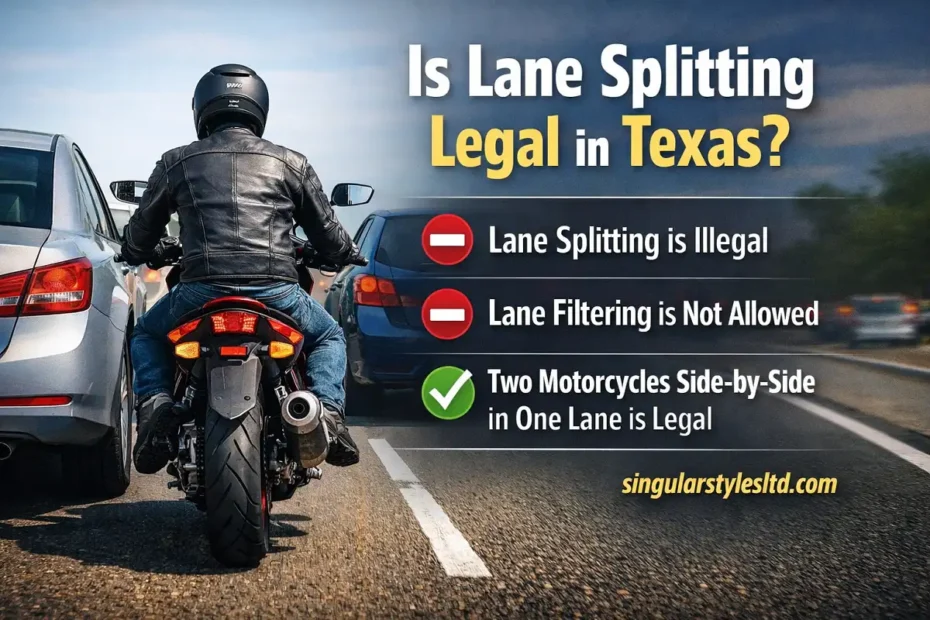
Motorcyclists often look for ways to move through heavy traffic more efficiently. One technique commonly discussed is lane splitting, where a motorcycle rides between lanes of slow or stopped cars. But before trying it on Texas roads, riders should understand what the law actually allows. The short answer: lane splitting is not legal in Texas. Texas law specifically prohibits motorcycles from riding between lanes of traffic moving in the same direction or passing another vehicle while sharing the same lane. However, the law allows two motorcycles to ride next to each other in the same lane. Understanding how this rule works and how it affects riders in real situations can help motorcyclists avoid tickets, reduce accident risks, and stay compliant with Texas traffic laws.
Quick Answer: Is Lane Splitting Legal in Texas?
Here is the simple breakdown for riders:
-
Is lane splitting legal in Texas? No.
-
Is lane filtering legal in Texas? No.
-
Can two motorcycles share one lane? Yes, up to two motorcycles may ride side-by-side.
-
Where is lane splitting legal in the United States? It is currently legal in only a few states, including California and some others that allow limited forms of lane filtering.
Because traffic laws can change, riders should always check current Texas statutes before relying on outdated information.
What Texas Law Says About Lane Splitting
Texas motorcycle regulations are governed by the Texas Transportation Code. The relevant rule clarifies how motorcycles must operate within traffic lanes.
Motorcycles Have Full Use of a Lane
Under Texas law, a motorcycle is entitled to the full use of a lane, just like any other vehicle. Other drivers are not allowed to crowd a motorcycle out of its lane or attempt to share the lane with it.
This rule exists primarily for safety reasons. Motorcycles need adequate space for maneuvering, balance, and hazard avoidance.
Riding Between Lanes Is Prohibited
The same law also explains that a motorcyclist may not operate between lanes of traffic moving in the same direction. In practical terms, this means a rider cannot weave between cars to move ahead of traffic.
Additionally, a rider cannot pass a vehicle while sharing the same lane as that vehicle.
Two Motorcycles May Ride Two Abreast
While lane splitting is not allowed, the law does permit two motorcycles to ride side-by-side in a single lane. This practice is often referred to as riding two abreast and is commonly used by motorcycle groups traveling together.
However, more than two motorcycles cannot occupy the same lane side-by-side.
Lane Splitting vs. Lane Filtering: What’s the Difference?
Many riders use the terms lane splitting and lane filtering interchangeably, but they describe slightly different behaviors.
Lane Splitting
Lane splitting typically refers to riding between lanes of moving traffic, usually on highways where vehicles are traveling slowly.
For example, a motorcyclist may ride between two lanes of cars during rush hour to bypass congestion.
Lane Filtering
Lane filtering generally refers to riding between stopped or very slow vehicles, often near traffic lights or intersections.
In some countries and U.S. states, lane filtering is allowed because it can reduce rear-end collisions involving motorcycles.
How Texas Treats Both
Texas law does not make a separate distinction between these two practices. Because the statute prohibits operating between lanes of traffic traveling in the same direction, both lane splitting and lane filtering are effectively illegal in Texas.
Was Lane Splitting Ever a Gray Area in Texas?
For many years, riders debated whether lane splitting might be technically allowed because older statutes did not explicitly mention the term.
Some riders believed the law was unclear or open to interpretation.
Recent Legal Clarification
More recent legislation clarified the rule and removed much of that confusion. The updated law explicitly states that motorcycles cannot ride between lanes of traffic or pass vehicles while sharing the same lane.
This clarification helped establish a clear and enforceable rule for both riders and law enforcement.
What Motorcyclists Can Still Legally Do in Texas
Even though lane splitting is prohibited, Texas law still provides several rights and protections for motorcycle riders.
Full Lane Use
Motorcycles are allowed to use an entire traffic lane. Other vehicles must treat motorcycles as legitimate vehicles and cannot force them out of their lane.
Two-Abreast Riding
Two motorcycles may legally ride side-by-side within one lane. This is commonly practiced by groups traveling together and is permitted under Texas law.
Safe Passing Rules
Motorcyclists may pass other vehicles just like any other driver, but they must do so using another lane, not by squeezing past within the same lane.
Law Enforcement Exception
Police officers performing official duties may operate motorcycles differently if necessary for enforcement or emergency purposes.
What Happens If You Lane Split in Texas?
Riders who attempt lane splitting in Texas could face legal consequences.
Possible Traffic Citations
Because the practice violates Texas traffic rules, a rider may receive a traffic citation for improper lane usage or unsafe operation.
The exact penalty can vary depending on circumstances, local enforcement practices, and whether other violations occurred at the same time.
Increased Accident Risk
Lane splitting can also increase accident risk in areas where drivers do not expect motorcycles to pass between lanes.
Drivers may suddenly change lanes or open doors, leaving little reaction time for a rider traveling between vehicles.
How Lane Splitting Can Affect Motorcycle Accident Claims
Another important consideration is legal liability after a crash.
Insurance Companies May Assign Fault
If a crash occurs while a motorcyclist is lane splitting, an insurance company may argue that the rider contributed to the accident by violating traffic laws.
Texas follows a modified comparative fault rule, meaning compensation may be reduced if a rider is partly responsible for the crash.
Fault Is Not Always Automatic
However, lane splitting does not automatically make a motorcyclist completely at fault. Investigators still look at the entire situation, including:
-
driver behavior
-
sudden lane changes
-
failure to signal
-
road conditions
-
witness statements
-
crash reports
In many cases, multiple factors contribute to a collision.
Common Misconceptions About Lane Splitting in Texas
Because motorcycle laws vary widely between states, confusion is common.
Here are some frequent misconceptions.
“Lane Splitting Is Allowed When Traffic Stops”
False. Texas law does not allow riding between lanes even when vehicles are stopped.
“Lane Splitting Is Safer, So It Must Be Legal”
While some studies suggest potential safety benefits in certain conditions, Texas law still prohibits the practice.
“Two Motorcycles in One Lane Is Lane Splitting”
Incorrect. Two motorcycles riding side-by-side in the same lane is legal in Texas.
“Motorcycles Can Share a Lane With Cars”
No. A motorcycle and a car cannot occupy the same lane simultaneously.
Motorcycle Safety Tips for Texas Riders
Even without lane splitting, riders can take steps to stay safer on Texas roads.
Stay Visible
Wear bright gear, use headlights, and avoid lingering in vehicle blind spots.
Maintain Safe Following Distance
Motorcycles need adequate space to stop safely, especially at highway speeds.
Anticipate Driver Behavior
Assume drivers may not see you, particularly during heavy traffic or bad weather.
Avoid Aggressive Maneuvers
Sudden weaving between vehicles or rapid lane changes can increase crash risk.
FAQ: Lane Splitting in Texas
Is lane splitting illegal in Texas?
Yes. Texas law prohibits motorcycles from operating between lanes of traffic moving in the same direction.
Is lane filtering legal in Texas?
No. The same law that prohibits lane splitting also prevents riding between lanes of stopped or slow traffic.
Can motorcycles ride side by side in Texas?
Yes. Texas allows two motorcycles to ride two abreast within a single lane.
Why do some states allow lane splitting?
Some states permit it because research suggests it may reduce rear-end motorcycle crashes in certain conditions. However, each state sets its own traffic laws.
Could Texas allow lane splitting in the future?
Traffic laws sometimes change as new safety research emerges. Riders should monitor updates to Texas transportation laws for any future developments.
Bottom Line
Lane splitting may seem like a convenient way to bypass traffic, but it is not legal in Texas. State law clearly states that motorcycles cannot ride between lanes of vehicles traveling in the same direction or pass cars within the same lane. However, Texas riders still have the right to full lane use and may legally ride two motorcycles side-by-side within a single lane. For motorcyclists, the safest approach is to follow standard traffic rules, maintain lane discipline, and stay aware of surrounding vehicles. Understanding the law not only helps avoid citations but can also play an important role in protecting riders after an accident.
Read more informational articles on Singular Styles Ltd.