
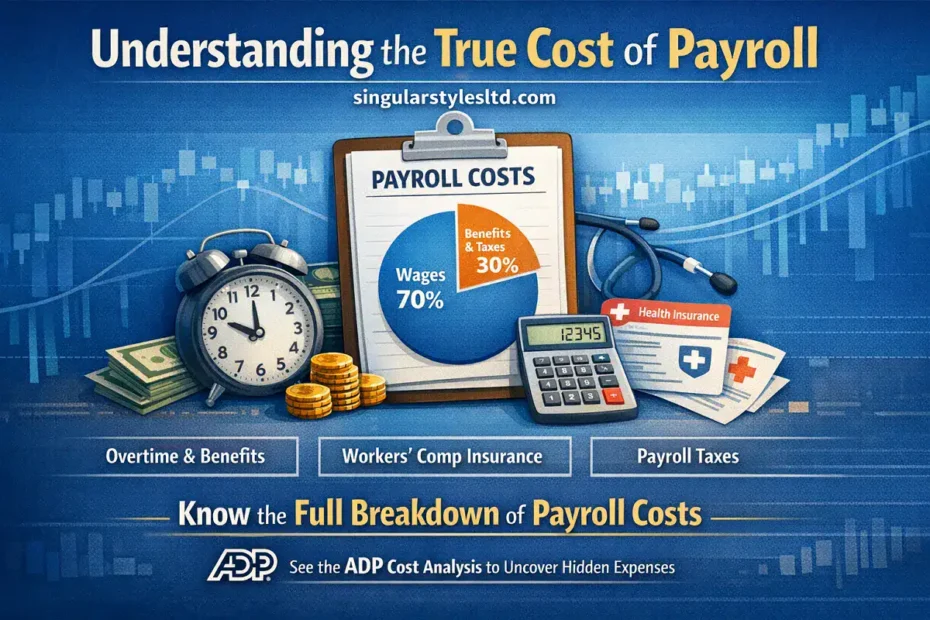
Small business owners quickly realize that payroll expenses reach beyond the sum of monthly employee wages. These costs include overtime payments, health and retirement benefits, workers’ compensation insurance, and payroll taxes. When businesses only consider wages, they risk underestimating their true labor costs. Research indicates that wages and salaries account for around 70 percent of total compensation, while the remaining 30 percent consists of additional liabilities. Grasping this entire picture prepares businesses to budget realistically and avoid unwelcome financial surprises. For a detailed cost breakdown that helps owners anticipate hidden expenses, see this cost breakdown from ADP.
Financial forecasting based on a complete assessment of its costs is essential for small businesses to remain agile and prepared for unexpected developments. This comprehensive view lets owners identify how benefit offerings and changing regulations can influence their payroll structure throughout the year, minimizing surprises and helping them set aside enough to meet obligations. Inaccurate it estimation can lead to shortfalls or forced spending cuts in other business areas, which may slow growth or impact employee morale. Building an understanding of the full scope of payroll costs also gives business leaders leverage in competitive markets. By knowing the average cost for their industry and region, owners can calibrate their compensation strategy to attract and retain top talent without jeopardizing their bottom line. Considering all components, including taxes and employee benefits, enables more accurate cash flow projections and prudent planning.
Developing a Realistic Payroll Budget
Establishing an effective payroll budget begins with careful forecasting. Planning it costs over six to twelve months ensures that all liabilities are accounted for and enables management to shift resources as needed. Consider factors including scheduled raises or bonuses, seasonal employment, overtime, and anticipated tax changes. Comparing your pay structure and benefits package with market data ensures your compensation remains competitive while fitting into your financial plan. Small businesses should revisit their payroll budget quarterly. Reviewing actual payroll expenditures against forecasts helps management detect discrepancies early. For example, overtime may be overused in periods of high demand, or benefit costs could rise unexpectedly. By continually monitoring these changes, businesses can correct course before minor variances grow into significant financial issues. Regular payroll budget reviews are also vital for detecting patterns, such as recurring errors that can be resolved through process improvements or automation.

Ensuring Compliance with Payroll Tax Obligations
Payroll taxes are a frequent source of difficulty for small business owners. Common issues include missed filing deadlines, incorrect tax calculations, and late deposits, all of which can incur costly fines. To remain compliant, businesses must stay abreast of tax regulations and deadlines at the federal, state, and local levels. Using a payroll calendar and reminders helps reduce the likelihood of missing important due dates. Employers should also understand their obligations for employment taxes, including Social Security, Medicare, unemployment taxes, and any region-specific contributions. Partnering with a payroll service provider or a CPA specializing in small business payroll can further mitigate risk.
Implementing Effective Payroll Management Strategies
Effective payroll management starts with accurate forecasting. By anticipating labor costs based on sales projections and upcoming business initiatives, owners can allocate staffing levels that balance customer service and profitability. Cross-training employees to handle multiple roles enhances workforce flexibility, reduces costs associated with temporary hires, and prevents bottlenecks during absences or peak periods. Automation is another cornerstone of modern payroll management. Implementing its software not only streamlines pay runs but also significantly reduces human error. Automation features, including direct deposit, earned wage access, and automatic calculation of hours and taxes, allow businesses to operate efficiently and devote more time to growth initiatives.
Leveraging Payroll Software Solutions
Software solutions tailored for small businesses help owners manage payroll efficiently and accurately. Platforms such as Gusto, Xero, and QuickBooks automate several complex processes, from calculating deductions and taxes to filing reports. By integrating with accounting and HR systems, these tools minimize the administrative burden and ensure compliance with state and federal requirements.
Most leading Payroll software offers features such as automated tax filing, compliance monitoring, and customizable reporting, enabling businesses to analyze payroll trends and make data-driven decisions. Automation also improves confidentiality and security by limiting the exposure of sensitive payroll data to a select group of authorized users.
Outsourcing Payroll Services
Outsourcing it can be a cost-effective solution for businesses aiming to reduce administrative overhead. Specialized providers have expertise in tax regulations and compliance, lessening the risk of errors and penalties. Outsourcing also frees time for owners and managers to focus on high-impact business functions, such as sales and customer service. While outsourcing does incur a fee, the access to expert knowledge, regulatory updates, and advanced technological solutions often results in fewer errors and lower overall costs. It also creates peace of mind for business owners who may not have the resources to remain current with ever-changing payroll laws.
Monitoring Cash Flow to Meet Payroll Obligations
Maintaining healthy cash reserves is essential for consistently meeting payroll obligations. Cash shortages are a leading cause of missed payrolls and increased staff turnover. According to industry data, businesses with it shortfalls typically have cash reserves covering only about 30 days of payroll, compared to 120 days for more secure businesses. Regular analysis of incoming and outgoing funds helps owners anticipate periods of tight cash flow and make adjustments before issues arise. Monitoring cash flow on a rolling basis, supported by automated alerts from accounting systems, is an effective way to prevent payroll disruptions. This foresight also prepares businesses for seasonal variability and helps maintain strong relationships with employees by ensuring timely, accurate payments.
Conclusion
Payroll cost management is a cornerstone of financial strength for small businesses. By fully understanding their payroll expenses, implementing strategic management measures, leveraging proven software solutions, and considering outsourcing when appropriate, owners can avoid costly errors and foster stability. Effective payroll practices protect businesses from compliance pitfalls and pave the way for sustainable growth and happy teams.