
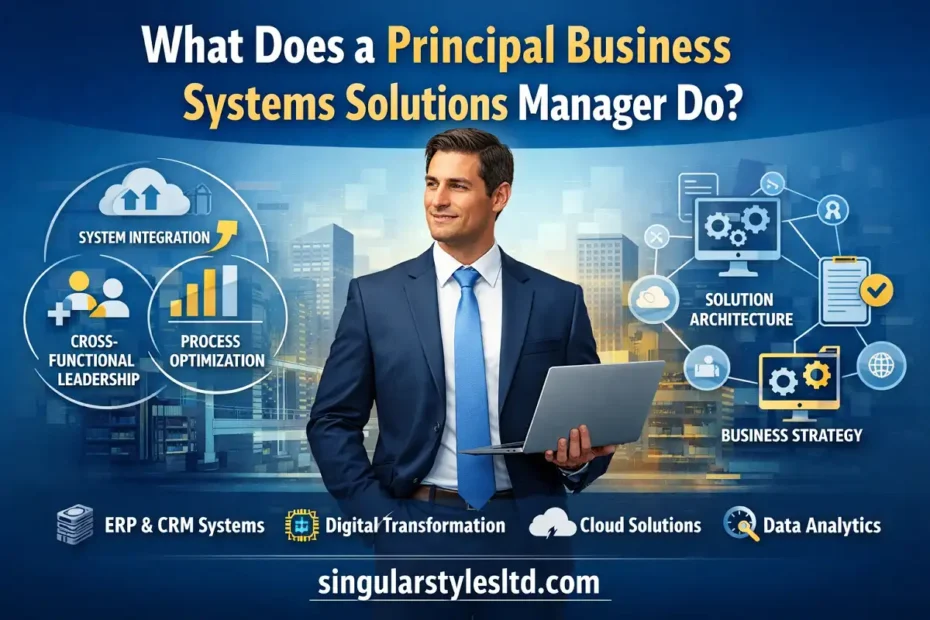
Modern organizations rely heavily on complex digital systems to manage operations, analyze data, and support strategic decisions. As companies grow and adopt more enterprise technologies, they need experienced professionals who can align business objectives with scalable technical solutions. One such role is the Principal Business Systems Solutions Manager. A Principal Business Systems Solutions Manager is a senior leader responsible for designing, managing, and optimizing enterprise business systems while ensuring they support organizational goals. This role sits at the intersection of business strategy, technology architecture, and cross-functional leadership. In this guide, you’ll learn what a Principal Business Systems Solutions Manager does, the key responsibilities of the role, the skills required to succeed, career paths, salary expectations, and the industries where this position is in high demand.
What Is a Principal Business Systems Solutions Manager?
A Principal Business Systems Solutions Manager is a senior technology and business leader responsible for overseeing enterprise business systems, designing scalable solutions, and aligning technology platforms with organizational goals. They bridge the gap between business stakeholders and technical teams while guiding digital transformation, system integration, and process optimization across an organization.
Key Responsibilities of a Principal Business Systems Solutions Manager
Although responsibilities may vary depending on the company and industry, several core duties are typically associated with this role.
1. Business Systems Strategy
One of the primary responsibilities is developing a long-term strategy for enterprise systems.
This includes:
-
Identifying technology solutions that support business objectives
-
Evaluating enterprise platforms such as ERP, CRM, and HR systems
-
Planning system architecture and infrastructure improvements
-
Supporting digital transformation initiatives
A principal-level manager often works with executive leadership to ensure technology investments deliver measurable business value.
2. Solution Architecture Design
Another core responsibility is designing enterprise-scale solutions.
This may involve:
-
Designing workflows that integrate multiple systems
-
Creating scalable architecture for enterprise applications
-
Ensuring systems can support business growth and innovation
-
Evaluating new technologies before implementation
These professionals frequently collaborate with solution architects, software engineers, and system administrators.
3. Cross-Functional Leadership
The job needs good leadership and the ability to work with different departments.
Typical collaborations include:
-
Product and engineering teams
-
Finance departments
-
Operations teams
-
IT infrastructure teams
-
Executive stakeholders
A Principal Business Systems Solutions Manager must translate business requirements into technical solutions while ensuring all teams remain aligned.
4. Process Optimization
Organizations rely on efficient systems to operate effectively. This role focuses on improving workflows by identifying inefficiencies in current processes.
Key tasks include:
-
Automating manual processes
-
Reducing operational bottlenecks
-
Improving system performance
-
Enhancing data accessibility and reporting
By optimizing systems, businesses can increase productivity and reduce operational costs.
5. Stakeholder Communication
Because the role sits between technical teams and business leaders, communication is essential.
Responsibilities include:
-
Gathering business requirements
-
Presenting technical strategies to executives
-
Explaining system capabilities to non-technical teams
-
Managing expectations across departments
Strong communication ensures technology initiatives support business goals.
6. System Integration Oversight
Large organizations often use dozens of software tools that must work together seamlessly.
A Principal Business Systems Solutions Manager ensures that systems integrate effectively through:
-
API integrations
-
Data pipelines
-
middleware platforms
-
cloud-based services
Successful integration ensures that data flows smoothly between platforms.
Essential Skills for a Principal Business Systems Solutions Manager
Professionals in this role must combine technical expertise, business knowledge, and leadership abilities.
Technical Skills
Important technical capabilities include:
-
Enterprise systems knowledge (ERP, CRM, HRIS)
-
System architecture and solution design
-
Cloud computing platforms
-
API and data integration
-
Data analytics and business intelligence
-
Database management
Many professionals also have experience working with enterprise technologies such as cloud platforms or integration frameworks.
Business Skills
Since the role involves aligning technology with strategy, business understanding is critical.
Key skills include:
-
Business process modeling
-
Strategic planning
-
Financial and operational analysis
-
Requirements gathering
-
Risk assessment
These skills help ensure technology investments deliver measurable outcomes.
Leadership and Soft Skills
Leadership abilities are equally important.
Common leadership skills include:
-
Stakeholder management
-
Strategic decision-making
-
Team leadership and mentorship
-
Conflict resolution
-
Project management
Senior managers often guide cross-functional teams and influence company-wide technology initiatives.
Common Tools and Technologies Used
A Principal Business Systems Solutions Manager works with a wide range of enterprise tools and platforms.
Enterprise Platforms
Examples include:
-
Salesforce
-
SAP
-
Oracle
-
Workday
-
Microsoft Dynamics
These platforms support business operations such as finance, sales, and human resources.
Data and Integration Tools
To connect systems and manage data flows, professionals may use tools such as:
-
MuleSoft
-
Informatica
-
Dell Boomi
-
Apache Kafka
-
ETL tools and data warehouses
Integration tools ensure systems communicate effectively.
Collaboration and Project Management Tools
Large technology projects require coordination across teams. Common tools include:
-
Jira
-
Confluence
-
ServiceNow
-
Asana
-
Microsoft Teams
These tools help track tasks, manage documentation, and coordinate projects.
How to Become a Principal Business Systems Solutions Manager
Most professionals reach this position after several years of experience in business systems or enterprise technology.
A typical career progression might look like this:
-
Business Analyst
-
Systems Analyst
-
Business Systems Manager
-
Senior Solutions Architect
-
Principal Business Systems Solutions Manager
Professionals typically gain deep experience in enterprise technology before advancing to principal-level leadership.
Educational Requirements
Most individuals in this role have a strong academic background in technology or business.
Common degrees include:
-
Information Systems
-
Computer Science
-
Business Administration
-
Software Engineering
-
Data Analytics
Many professionals also pursue postgraduate education, such as an MBA, to strengthen their business leadership skills.
Valuable Certifications
Industry certifications can strengthen expertise and credibility.
Common certifications include:
-
Project Management Professional (PMP)
-
Certified Business Analysis Professional (CBAP)
-
Salesforce Architect certifications
-
AWS Solutions Architect certification
Certifications demonstrate technical knowledge and leadership capability.
Principal Business Systems Solutions Manager Salary
Salary can vary significantly depending on location, company size, and experience.
Average Salary in the United States
In many organizations, the typical salary range is approximately:
$140,000 to $200,000 per year
Senior leaders in large technology companies may earn even more when bonuses, stock compensation, and benefits are included.
Factors Affecting Salary
Several factors influence earnings:
-
Years of experience
-
Industry sector
-
Geographic location
-
Company size
-
Technical specialization
Professionals working in large enterprise technology companies often earn higher salaries.
Industries That Hire This Role
Organizations across many sectors rely on business systems leadership.
Common industries include:
-
Technology and SaaS companies
-
Financial services
-
Healthcare organizations
-
E-commerce companies
-
Manufacturing enterprises
-
Consulting firms
Companies undergoing digital transformation especially value this role.
Example of the Role in Action
Consider a company implementing a new enterprise CRM platform.
A Principal Business Systems Solutions Manager might:
-
Analyze the company’s current sales and customer data systems
-
Select a platform such as Salesforce
-
Design integration between CRM, billing systems, and marketing tools
-
Lead cross-department implementation teams
-
Ensure the system supports long-term scalability
After implementation, the organization may gain improved customer insights, faster sales processes, and more accurate reporting.
Common Challenges in This Role
Despite its strategic importance, the position presents several challenges.
Managing Legacy Systems
Many companies still rely on outdated infrastructure that is difficult to modernize.
Aligning Multiple Departments
Different teams often have conflicting priorities, making system implementation complex.
Complex Integrations
Large organizations use dozens of tools that must integrate smoothly.
Scaling Systems for Growth
Technology platforms must handle increased data, users, and operational demands.
Future Trends for Business Systems Leadership
The role of Principal Business Systems Solutions Managers is evolving as organizations adopt new technologies.
Important trends include:
AI-Driven Automation
Artificial intelligence is increasingly used to automate workflows and improve decision-making.
Cloud-First Infrastructure
More companies are migrating business systems to cloud environments.
Data-Driven Strategy
Organizations rely heavily on analytics and business intelligence to guide strategic decisions.
Enterprise Digital Transformation
Companies across industries are modernizing operations through advanced digital platforms.
Research organizations such as Gartner and Forrester Research frequently highlight the growing importance of enterprise systems leadership in digital transformation initiatives.
Frequently Asked Questions
What does a principal business systems manager do?
A principal business systems manager oversees enterprise systems, designs scalable technology solutions, manages cross-department projects, and ensures business platforms support organizational goals.
Is the principal higher than the senior manager?
Yes. In many organizations, principal-level roles are more senior than senior manager positions and often involve strategic leadership and enterprise-wide responsibilities.
What is the difference between a solutions architect and a business systems manager?
A solutions architect primarily focuses on technical architecture, while a business systems manager focuses on aligning enterprise systems with business processes and strategic objectives.
How much does a principal systems manager earn?
In the United States, salaries typically range from $140,000 to $200,000 or more, depending on experience, company size, and industry.
What skills are needed for this role?
Important skills include system architecture, enterprise software knowledge, strategic planning, stakeholder management, and leadership.
Conclusion
The Principal Business Systems Solutions Manager plays a critical role in modern organizations by aligning technology infrastructure with strategic business goals. These professionals lead enterprise system design, oversee complex integrations, and guide digital transformation initiatives that improve efficiency and scalability. As companies increasingly rely on advanced technology platforms, the demand for experienced business systems leaders continues to grow. Professionals who combine technical expertise, business insight, and strong leadership skills are well positioned to succeed in this high-impact role. For individuals interested in enterprise technology leadership, becoming a Principal Business Systems Solutions Manager can be a rewarding career path with significant influence and growth opportunities.